
Character Analysis: Anakin Skywalker
Is he really a good person?

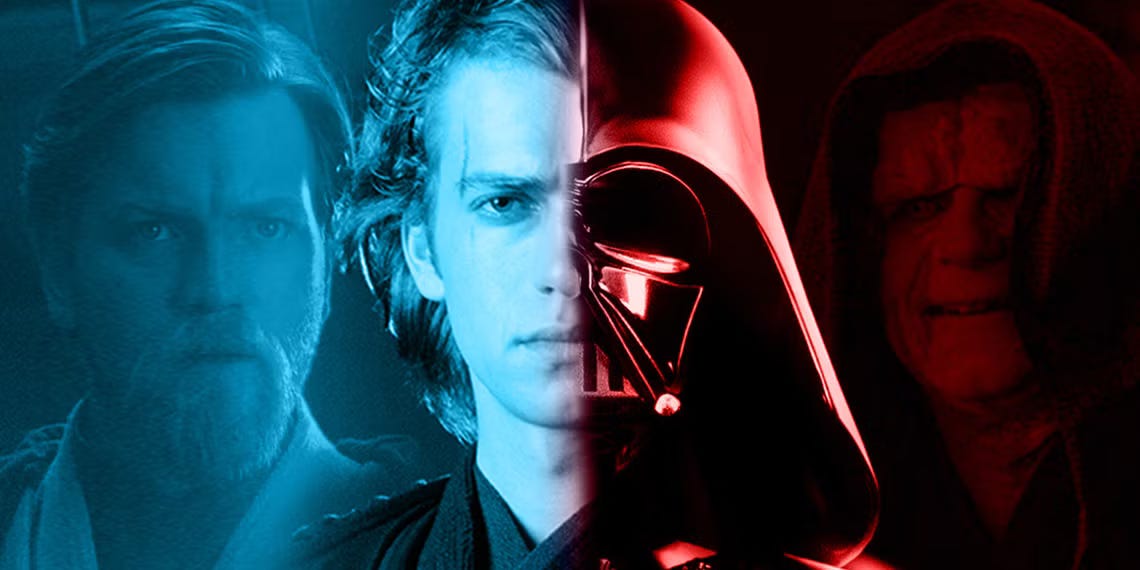
When people talk about redemption arcs, one of the prime examples that they give is Anakin Skywalker/Darth Vader. He’s one of the most iconic villains in fiction. Still, every time I go back to Star Wars over the years, my feelings about his character become more mixed. He gets defended a lot, but I think we need to ask: how much of Anakin’s downfall the results of the Jedi failing him? And how much of it was the result of his own selfishness.? Did he ever truly feel any remorse for his actions?
Note: I haven’t consumed any of the additional Star Wars media like animated series, comics, or video games. This analysis is drawn solely from the movies.
The Jedi
Looked at objectively, the Jedi Order is a cult. Its members are taken as children, separated from their families, taught to suppress their emotions, and forbidden from having relationships. They may have saved Anakin from slavery, but they also separated him from his only family (Which is a major nitpick I had when watching The Phantom Menace: why didn’t they save his mother, too? In fact, why didn’t they take a squad of Jedi over to Tatooine and free all the slaves?). He was basically raised by Obi-Wan, who was still grieving for his own mentor and probably not equipped to raise a child.
All his life, Anakin was told that he was the Chosen One. Greatness was expected to him, and he lived up to those expectations. Naturally, this made him arrogant — but also insecure, desperate for approval. And then, in the end, the Jedi refuse to grant him this approval.
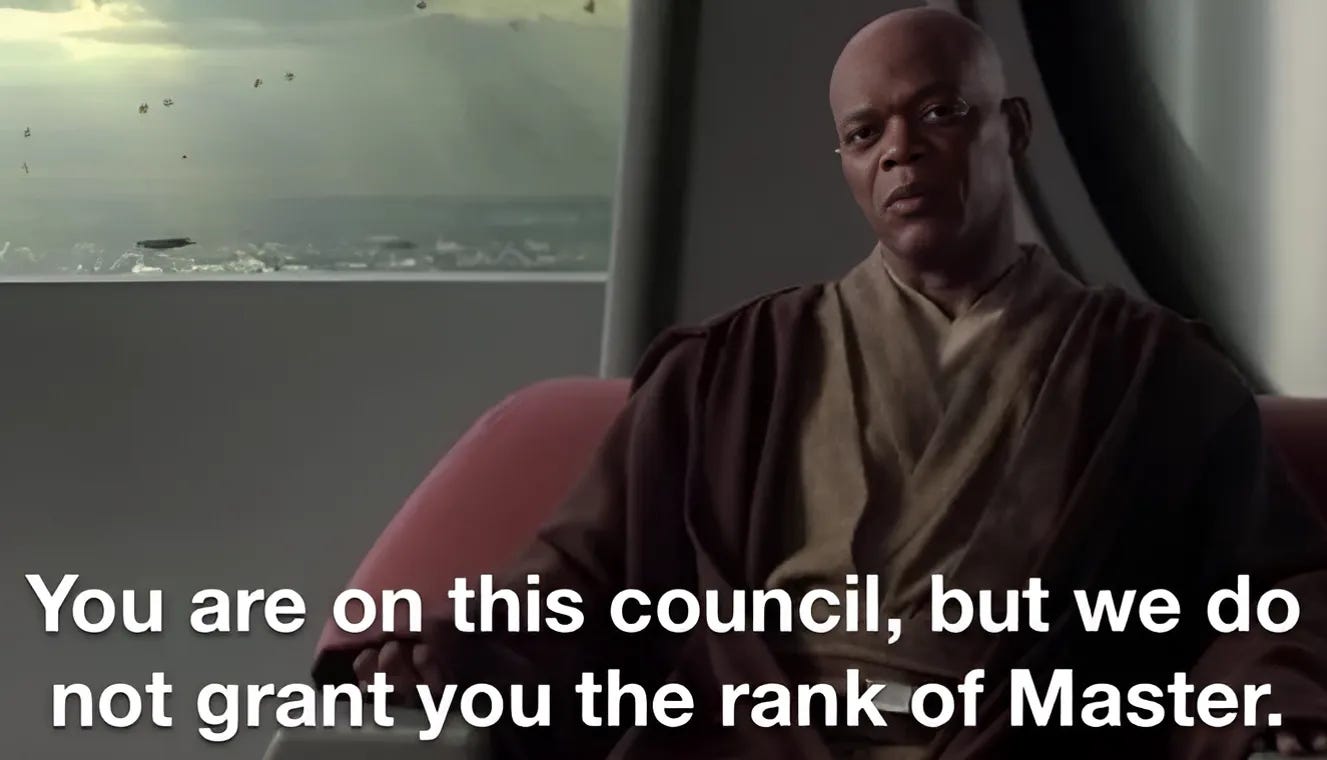
This scene in Revenge of the Sith is often referenced in memes, but I think it’s pretty outrageous and unfair (I’ll take a seat now). Anakin literally lost a hand fighting for the Jedi cause. He rescued the Chancellor of the Republic, defeated a Sith Lord, and probably did a bunch of other impressive stuff during Clone Wars. They don’t even give him a reason — just make him feel like a child who should be grateful that he’s allowed to be in the same room as the grown-ups.
In the same movie, he seeks advice from Yoda about helping Padme and preventing his visions. Instead of using his 900 years of experience to give him any actual advice, Yoda just spouts generic Jedi platitudes about ‘letting go of attachment’. I think Revenge of the Sith best highlights the flaws of the Jedi: how they failed Anakin, and the flaws in their attitude towards love.
It’s my opinion that the original and prequel trilogies criticized the old Jedi order. If Luke had followed Yoda and Obi-Wan’s advice, Han and Leia would have been captured by Vader and he would have been killed by the Emperor. The Jedi advise letting go of attachments, but it was Luke’s refusal to let go, to give up on his friends, and even his father, that ultimately saved the galaxy. I always thought that Luke’s new Jedi order would have allowed relationships like they did in Legends, and was disappointed when sequels and later shows like The Mandalorian didn’t go down this route.
Palpatine and Padmé
Palpatine swooped in to do what the Jedi Council failed: he granted Anakin the validation he felt he deserved. We see this in Anakin’s battle with Dooku in Revenge of the Sith; the law stated that they must take him prisoner so he can stand trial for his crimes. Anakin clearly didn’t want to do that. And why should he? He had the man who (supposedly) started the entire war dead to rights. The man who cut off his arm. The reason why he lost his friends. Anakin very much wanted to kill Dooku then and there, but he hesitated. Because he knew it was wrong. And then Palpatine stepped in, giving him the validation that he wanted. By ordering him to kill Dooku, he gave the act an air of legitimacy. That was all Anakin needed.
Throughout the movie, Palpatine manipulated Anakin by making him feel wanted. He set himself up as a kindly voice; the father figure Anakin never had. Someone he could vent his grievances to. He gained his trust, dropped hints about his true knowledge, and his ability to save Padmé.
The prequel trilogy as a whole would have worked a lot better if the romance between Anakin and Padme was more compelling. The dialogue of the prequels as a whole is… not spectacular, to put it mildly. But every scene with Anakin and Padme is so intensely cringeworthy that, to this day, I still consider Attack of the Clones to be worse than anything Disney put out.

Anakin’s hatred of sand notwithstanding, Padmé was the most important person in his life. Even more so when she became pregnant. After his mother’s death, he knew what it was like to lose someone. He never wanted to lose Padmé like that. Which is why, when he began receiving visions about her death, he became so desperate to save her.
Palpatine played on Anakin’s desperation. Convinced him that he was the only person who could save Padmé. During his confrontation with Windu, that was the choice that Anakin was faced with; conform to the Jedi ideals once more and suffer for it, or save Padmé by saving Palpatine. He chose Palpatine. Having crossed the point of no return, he was willing to do anything to save Padmé. Even kill his allies and innocent children. And then the two people he loved most — Padmé and Obi-Wan — condemned him for his choices. Enraged, hurt, and in denial of what he had become, he lashed out at them. You know how that turned out.

Evil and Redemption
At that point, Anakin had royally nuked his life. He committed genocide, murdered children, supported a fascist dictator’s rise to power and killed his wife and unborn children (or so he believed). He had no further reason to serve Palpatine, but what other options did he have? Nearly everybody he had known were dead. Those who survived rightly despised him. This is just my guess, but Anakin probably spiraled deeper into self-hatred. He pushed more and more blame for what he had become onto the Jedi, particularly Obi-Wan, in order to live with himself. It is interesting to note that he’s the only Sith to exclusively use his Sith name instead of his actual name; it shows Anakin’s hatred both for the man he is and the man he used to be.
Something many people don’t talk about is that Anakin didn’t actually know Luke that well. They had, what, three conversations before he died? Not much of a relationship. My guess would be that Anakin was at that point so desperately unhappy that he threw himself at the first chance of redemption. While Obi-Wan was a symbol of his failures and those of the Jedi, his relationship with Luke was a blank slate. Something he didn’t resent as a reminder of his failures. Something that gave him hope. By sacrificing his life to save his son, he found redemption, both in Luke’s eyes and his own.
Conclusion
So the question is, does Anakin deserve redemption? Was he ever a good person?
Anakin was a product of his environment — his childhood as a slave, the loss of his mother, the Jedi’s incompetence and Palpatine’s manipulations. But he was also a product of his own choices. He chose to side with Sidious. He chose to kill the Younglings. He chose to attack Padmé on Mustafar, which perhaps contributed to her death. His reasons, no matter how noble, do not excuse or justify his actions.
At the end of the day, Anakin was a man willing to do horrible things to protect those he loved, and that desire to protect led him down a dark path. Perhaps it was selfish of him to do so. But maybe, the reason why so many people love him, is because they sympathize with that desire. Perhaps it is a selfish desire but it is a very human one. And while no human is fully good, very few are fully evil.
In short, draw your own conclusions.
Yooooo, I thoroughly enjoyed this, and have made a number of these points (but using a lot more words) before!
One detail re. the relationship between Anakin and Palpatine that I think is very important, and people often overlook, is that Palpatine was the only person other than Padme who Anakin could confide in about his mother's death and what he did to the Sand People. He suffered a horrific trauma, had a reaction that completely shook his self-image and identity, yet had to just go on pretending that everything was normal with Obi-Wan and the other Jedi, and could not even talk about it, because he would be blamed and lectured for even caring about his mother in the first place, let alone prioritising her safety over his mission. He confided in Palpatine because his Jedi elders would never and could never have understood, and Palpatine used that trust to encourage Anakin's anger and his feeling of being special.
The Clone Wars animated series also does a lot more to develop Anakin, and particularly to show how Palpatine was manipulating him for a long time and sabotaging other relationships that were good for Anakin. He is generally a far more three-dimensional and better realised character in TCW. I've got some stuff in the pipeline that will talk about this more.
Also hard agree on the Yoda scene and on how important that scene is - Anakin is terrified, and Yoda just gives him useless, cold platitudes, when Anakin obviously seeks comfort and reassurance. I know it's ridiculous to have beef with a literal muppet but I cannot stand Yoda, for this and many other reasons.
Re. the actual fall and redemption, it's kind of hard to decide whether Anakin deserved to be redeemed or not, because the character is handled in such an uneven way throughout both trilogies. Still, I do think the prequels weirdly do a good job of showing the extent to which the old Jedi Order was flawed, which makes it all the more frustrating when Disney glosses over that very important and very textual message (which they do constantly).
Reading this, I was struck again by how much the Jedi Council’s treatment of Anakin reminds me of the way society often treats gifted children more broadly: admired in theory, but also watched, overinterpreted, and subtly distrusted. I actually wrote a short essay on my Substack about that parallel, especially why the Council’s suspicion feels so instinctively reasonable to viewers.